

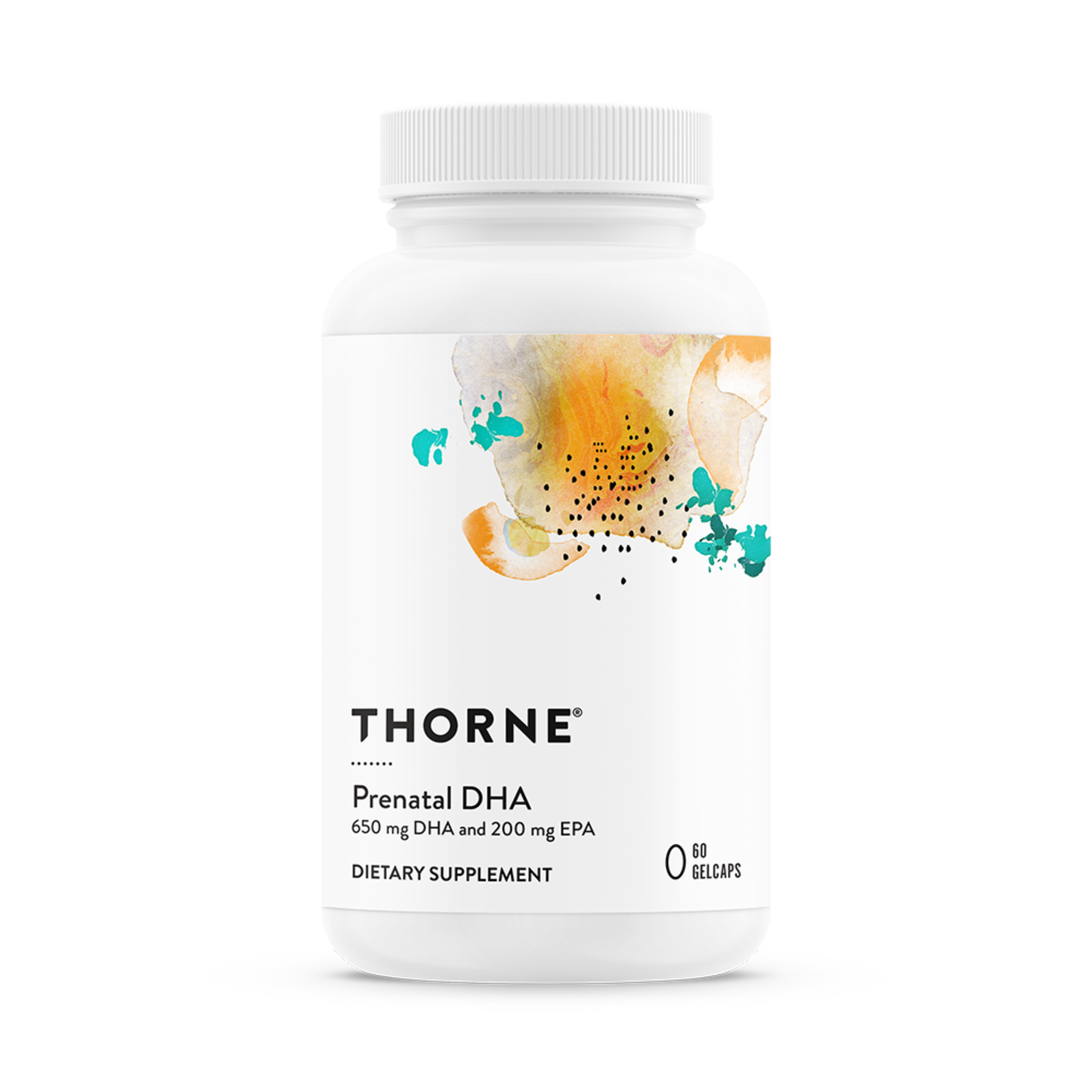




DHA is an omega-3 fatty acid that is essential for the development of a healthy brain. as well as nerves and eyes.* DHA is especially important for healthy fetal and infant development. accumulating in a baby’s developing brain primarily during the third trimester of pregnancy through the first two years of life.* DHA supports a healthy pregnancy as well.* Although the body can make some DHA. its conversion rate is low. so most DHA needs to be consumed in the diet. The primary dietary sources of DHA – fatty. cold-water fish – aren’t heavily consumed in a western diet. so an omega-3 nutritional supplement can help a mother reach an optimal DHA level.
Benefits of Thorne’s Prenatal DHA:
• Provides nutritional support for a healthy pregnancy*
• Supports memory and mood – before. during. and after pregnancy*
• Promotes normal fetal brain and nervous system development*
• Supports metabolism by helping to maintain a healthy insulin response*
• Promotes DHA levels in breast milk to support baby’s growth and development*
• Supports immune function*
• Helps maintain a healthy inflammatory response*
• Promotes healthy heart function*
Features of Thorne’s Prenatal DHA:
• Provides 650 mg of DHA and 200 mg of EPA per serving
• Rosemary. mint. and mixed tocopherols help reduce fish burps and are gentle on the stomach for mothers who experience pregnancy-related nausea*
• The easy-to-take gelcaps are smaller than most omega-3 supplements
• Tested for more than 250 environmental contaminants. including heavy metals. pesticides. dioxins. and PCBs
DHA by the numbers:
• Approximately 60 percent of a healthy brain is comprised of fat.
• DHA accounts for more than 90 percent of the fatty acids in the brain.
• DHA accounts for more than 90 percent of the fatty acids in the retina.
• Two lobes of the brain – frontal and prefrontal – rely heavily on DHA and are responsible for the ability to learn. problem solve. focus attention. and maintaining a positive mood.*
• Average daily U.S. adult intake of DHA and EPA is only 90 mg; and only 40 mg in children and teenagers.
• Most researchers recommend a minimum of 500 mg DHA + EPA daily.
*Note: These statements have not been evaluated by the Food and Drug Administration. This product is not intended to diagnose. treat. cure or prevent any disease. Consult your physician before adding a dietary supplement to your diet.
Related products


Home-Kitchen


Home-Kitchen

Home-Household Essentials Bestsellers




Home-Household Essentials Bestsellers


Home-Household Essentials Bestsellers

Home-Kitchen


Home-Kitchen